
Uncategorized
The Use of Uninterrupted Work Periods in Montessori

One of the main principles of the Montessori approach to education is the use of uninterrupted work periods. In these periods of time, students are able to work through various tasks at their own pace. No matter which age group a child is in or what concept they are working on, each child is given…
Read MoreThe Role of Guides in Montessori Schools
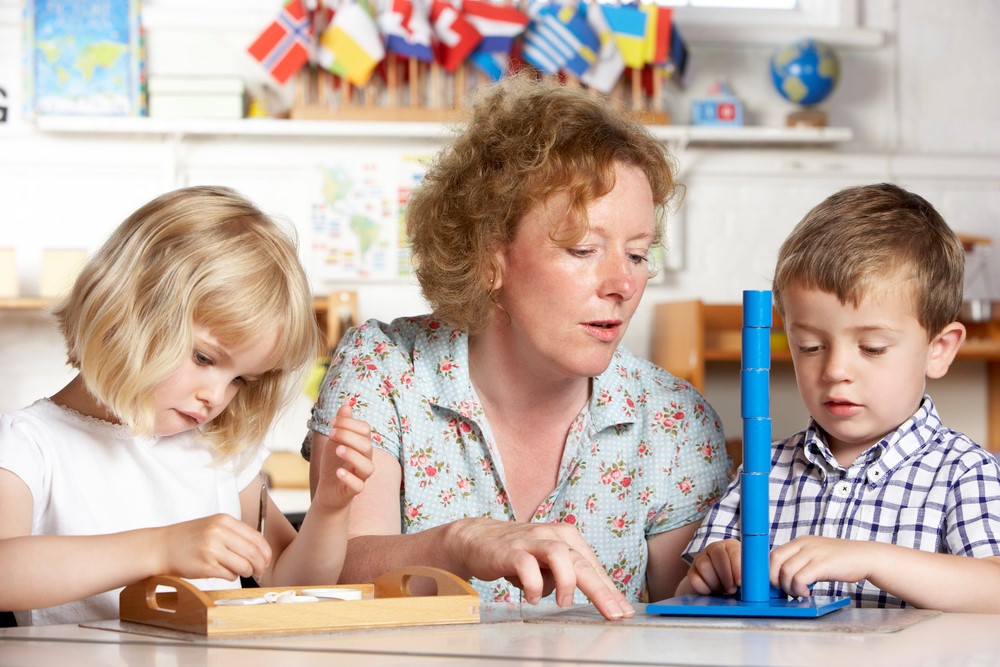
In a Montessori classroom, teachers play a unique but important role. We refer to our teachers as guides because they do more than just teach. Montessori guides do not stand at the front of the classroom reciting facts to the entire group of students. Instead, they migrate around the classroom, observing and interacting with students…
Read MoreDeveloping the Whole Child

One emphasis in Montessori education is on the development of the whole child. While traditional schools tend to focus on developing a child’s cognitive abilities, the Montessori method aims to develop every aspect of a child. There are four main elements that make up what Montessori refers to as the whole child: physical, emotional, social,…
Read MoreMontessori Learning Through Sensorial Work

According to Dr. Maria Montessori, sensorial experiences begin right when a child is born. Children use their senses in order to study their environment. By participating in sensory activities, children can consciously obtain clear information that helps them classify their surroundings. These classifications serve as stepping stones to organized intelligence, which gives children the ability…
Read MoreThe Importance of Global Citizenship

As a Montessori parent, you recognize how important it is for your child to become part of the emerging world community, and you want your child to help build that community in the future. Here at Silverline Montessori, we understand the importance of global citizenship and how it is constantly developing, from birth to adulthood.…
Read MoreThe Benefits of Multi-Age Classrooms

One of the main features of the Montessori method is multi-age classrooms. Montessori specialists place a child in a classroom based on their individual level of development, instead of placing them by their exact age. Typically, Montessori children are grouped according to the plane of development that they fall into. The planes of development include…
Read MoreLearning Through Nature: The Montessori Philosophy

Nature helps to drive the forces of curiosity and exploration within a child, while offering rich sensorial experiences as well. This is why nature is a vital part of the Montessori learning method. A Montessori education focuses on a deep connection between child development and nature. Children in Montessori schools learn to appreciate the environment…
Read MoreWhat is Virtue Education?

The primary focus of a Montessori education is on the development of the whole child. The Montessori method focuses on educating the human potential of each child in a classroom, with an emphasis on character education. We believe that character education is the key to helping every child unlock their own individual potential. Virtue education…
Read MoreMontessori vs. Daycare

When considering different child care methods for your child, Montessori preschools and traditional daycares are two popular options. While individual classrooms can be different, even in the same educational system, there are several major differences between the Montessori method and a more traditional daycare method. Age: Children normally stay in a traditional daycare system until…
Read More